
Our emotions greatly influence our thoughts and decisions, often revolving around the desire for pleasure and avoidance of pain.
This drive is a major source of mental biases. These biases can be harnessed for better decisions. This applies whether in designing products or making personal and professional choices.


Understanding Confirmation Bias
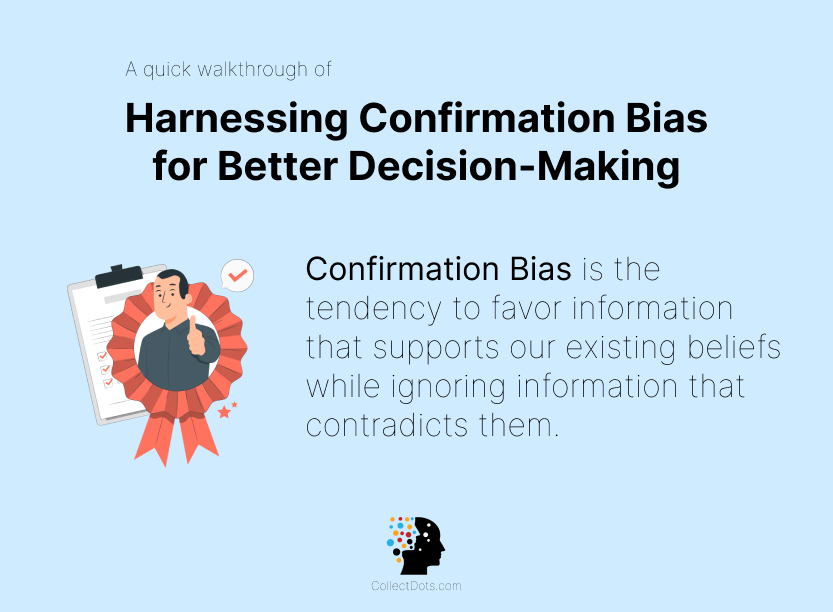
Confirmation Bias is the tendency to favor information that supports our existing beliefs while ignoring information that contradicts them.
This often aligns with what brings us comfort. It helps us avoid discomfort. We gather evidence that fits our preferences.
Signs of Confirmation Bias:
- Seeking information that supports your beliefs.
- Using personal bias when assessing information.
- Selectively remembering details that confirm your views.
- Emotional response to information that aligns with your beliefs.
Examples of Confirmation Bias in Daily Life
- Watching news channels that match your political views, like NDTV vs. Zee TV.
- Religious individuals favoring faith-based information, while non-religious individuals rely on science.
- Adhering to fitness advice that aligns with your habits, like preferring cardio if you dislike weight training.
- Reading only positive reviews of products you’re already interested in.
Confirmation Bias in Leadership
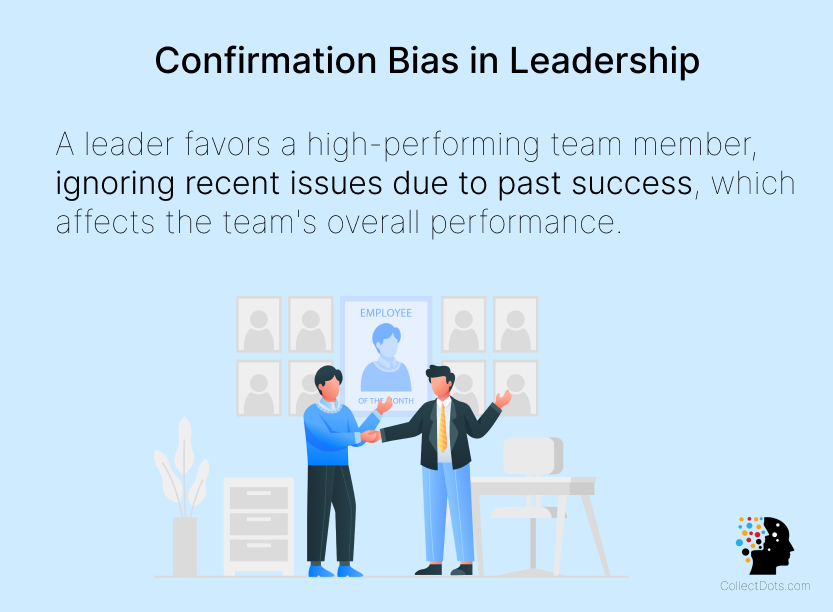
A leader favor a team member who has a history of strong performance. Even if that member’s recent work has declined, the leader overlooks the new issues, focusing only on positive past impressions.
This prevents the leader from addressing performance problems, ultimately affecting the team’s success.
Confirmation Bias in Customer Experience
Many iPhone users view Apple products as more intuitive and user-friendly than competitors. When a new iPhone is released, these users focus on features they enjoy.
They appreciate design and ecosystem compatibility. They overlook limitations, like fewer customization options. This bias makes them more forgiving of flaws, strengthening their loyalty to Apple.
Spot and help user by using Confirmation Bias in Design
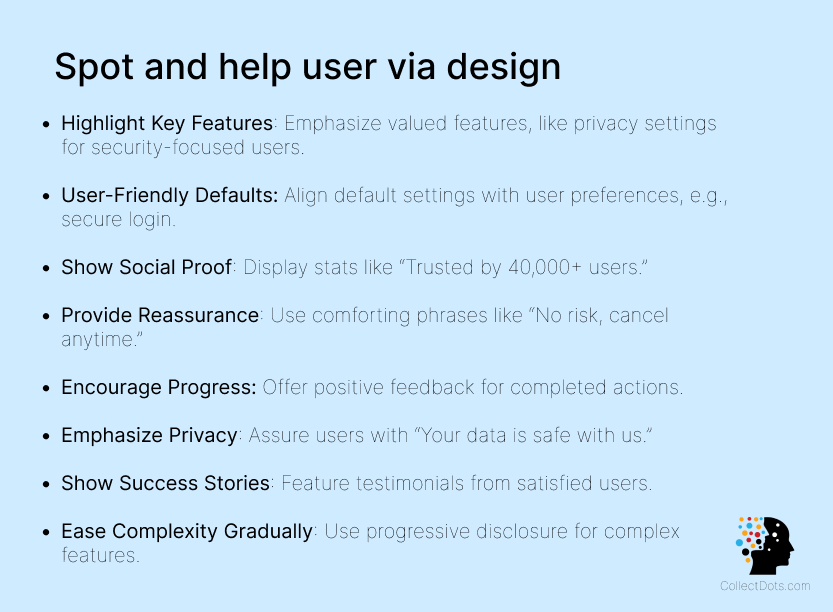
Designing with confirmation bias in mind helps meet users’ expectations and reinforces their choices:
Understanding and leveraging users’ confirmation biases—like reinforcing security for privacy-conscious users—can lead to more intuitive, user-centered experiences.
- Highlight Key Features: Emphasize features users already value, like privacy settings for security-focused users in a finance app.
- Set User-Friendly Defaults: Use default settings that align with user preferences, like secure login.
- Show Social Proof: Show stats like “Trusted by 40,000+ users.”
- Give Reassurance: Use comforting language, like “No risk, cancel anytime.”
- Encourage Progress: Offer positive feedback for completed actions.
- Emphasize Privacy: Use phrases like “Your data is safe with us.”
- Showcase Success Stories: Highlight testimonials from satisfied users.
- Introduce Complexity Gradually: For complex features, use progressive disclosure to ease the learning curve.
Emotions and confirmation bias in a nutshell
Emotions play a powerful role in our decisions, shaping our beliefs and biases without us even realizing it. Confirmation bias—the tendency to favor what we already believe—impacts our daily choices, from product design to leadership.
Learn to recognize this bias and harness it. Create more meaningful user experiences. Foster stronger team dynamics. Make thoughtful decisions that align with user expectations and values.

 Collect Dots
Leave a comment