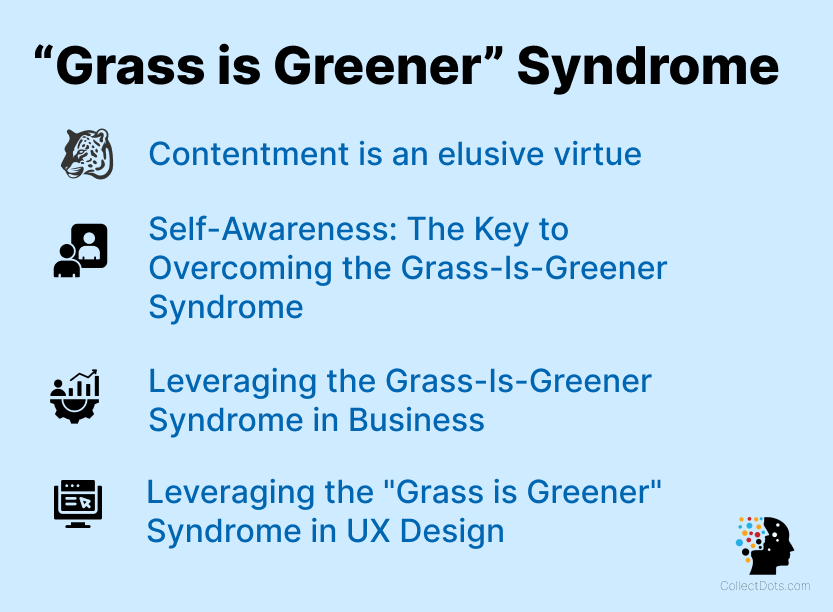
The “grass is greener” syndrome makes us chase what we don’t have, often ignoring what we already do. This endless cycle, fueled by dissatisfaction or external pressures. This syndrome grass is greener can be overcome positively.
Leveraging the Grass-Is-Greener Syndrome in Business
This natural human tendency can be harnessed to attract customers by suggesting that “something better exists.” Encourage them to see their current choice as ordinary. Entice them with the promise of an upgrade to a superior choice.
Focus on what customers are missing
Focus on what customers feel they’re missing. Find the unique value in your product that stands out and highlights what they lack. Polish and showcase this value there’s no need to downplay what they already have.
Human nature will naturally make them compare and undervalue it. Your job is to emphasize the gap your product fills.
Hit the grass-is-greener syndrome by showcasing exclusive features:
Example:
“AI-Powered Personalized Workout Plan”
Tired of generic workouts? Step up your fitness game with tailored plans designed just for you. Upgrade now and experience the difference!
Leveraging the “Grass is Greener” Syndrome in UX Design
The “grass-is-greener” syndrome shows a user’s natural tendency to seek better alternatives. UX designers can strategically use this tendency to create compelling experiences.
Highlight exclusive features. Show customers what they’re missing out on to create a sense of FOMO. Encourage them to upgrade or switch.
- Use side-by-side comparisons to prove your product’s superiority.
- Share user success stories highlighting the benefits of switching.
- Personalized suggestions to show users what they are missing. You have been using feature X – try feature Y to take it further and empowerment.
By tapping into this natural bias, UX design can guide users toward desirable actions. It enhances engagement and increases conversions. At the same time, users feel empowered by their choices.


Leave a Reply